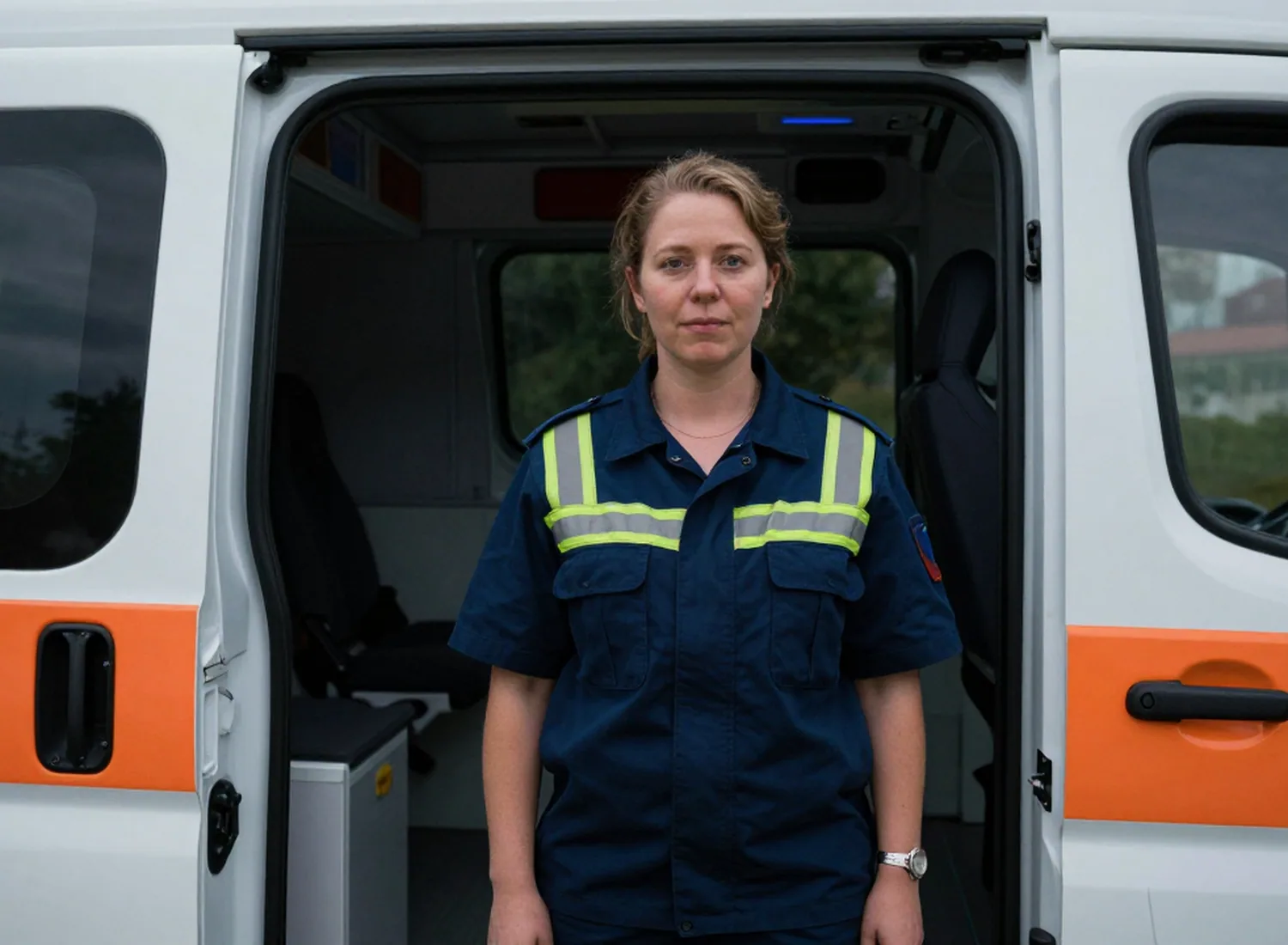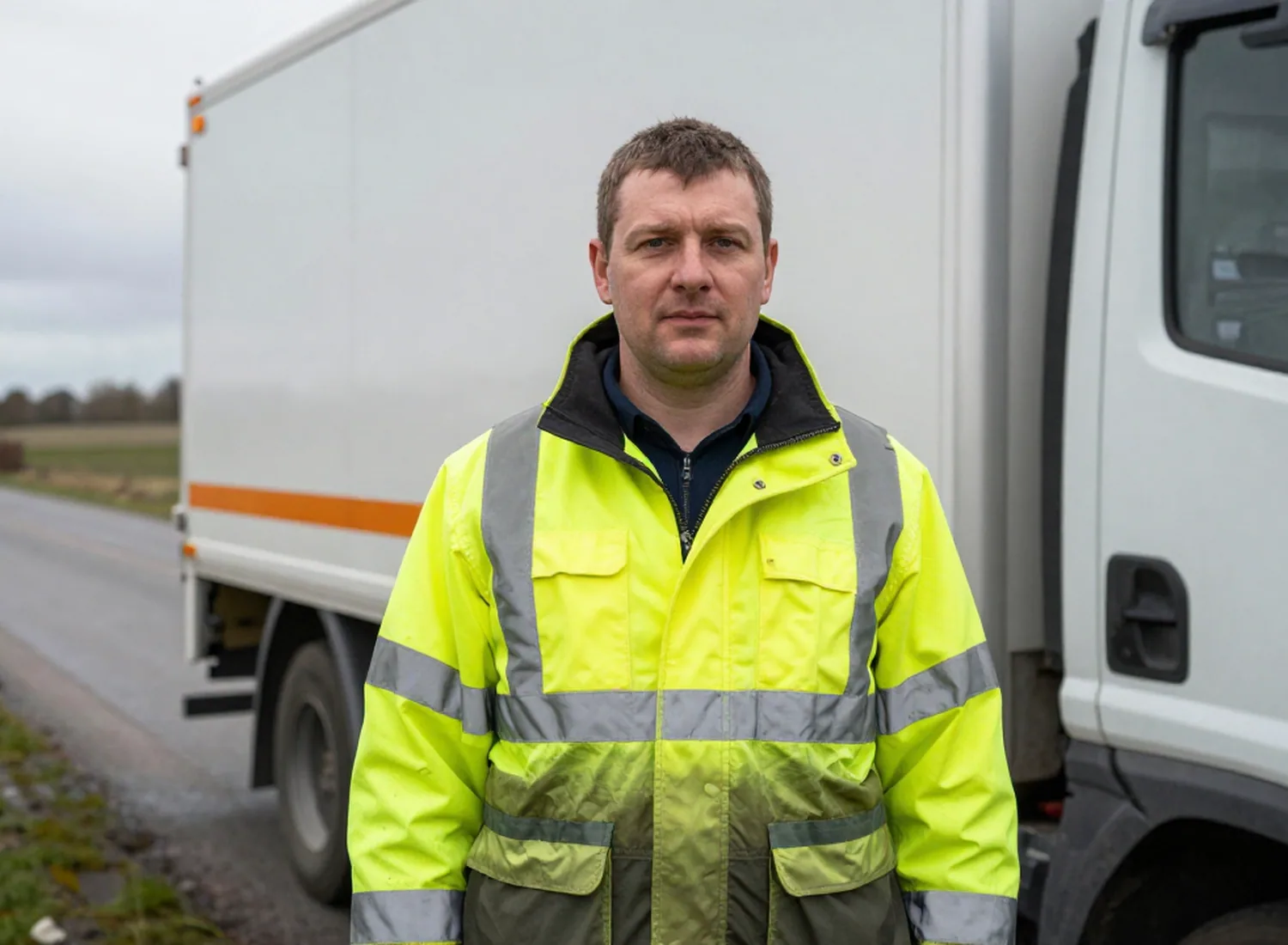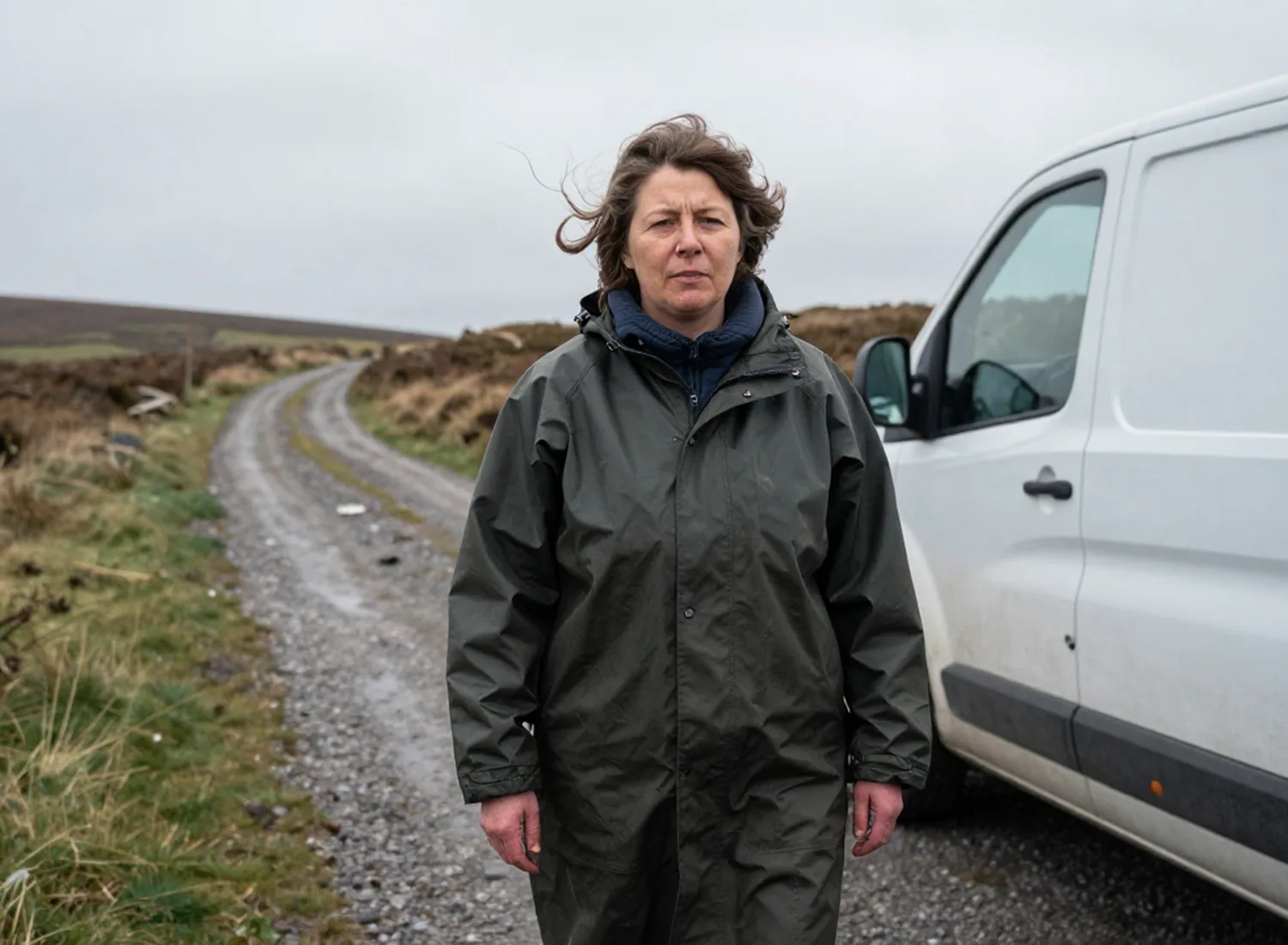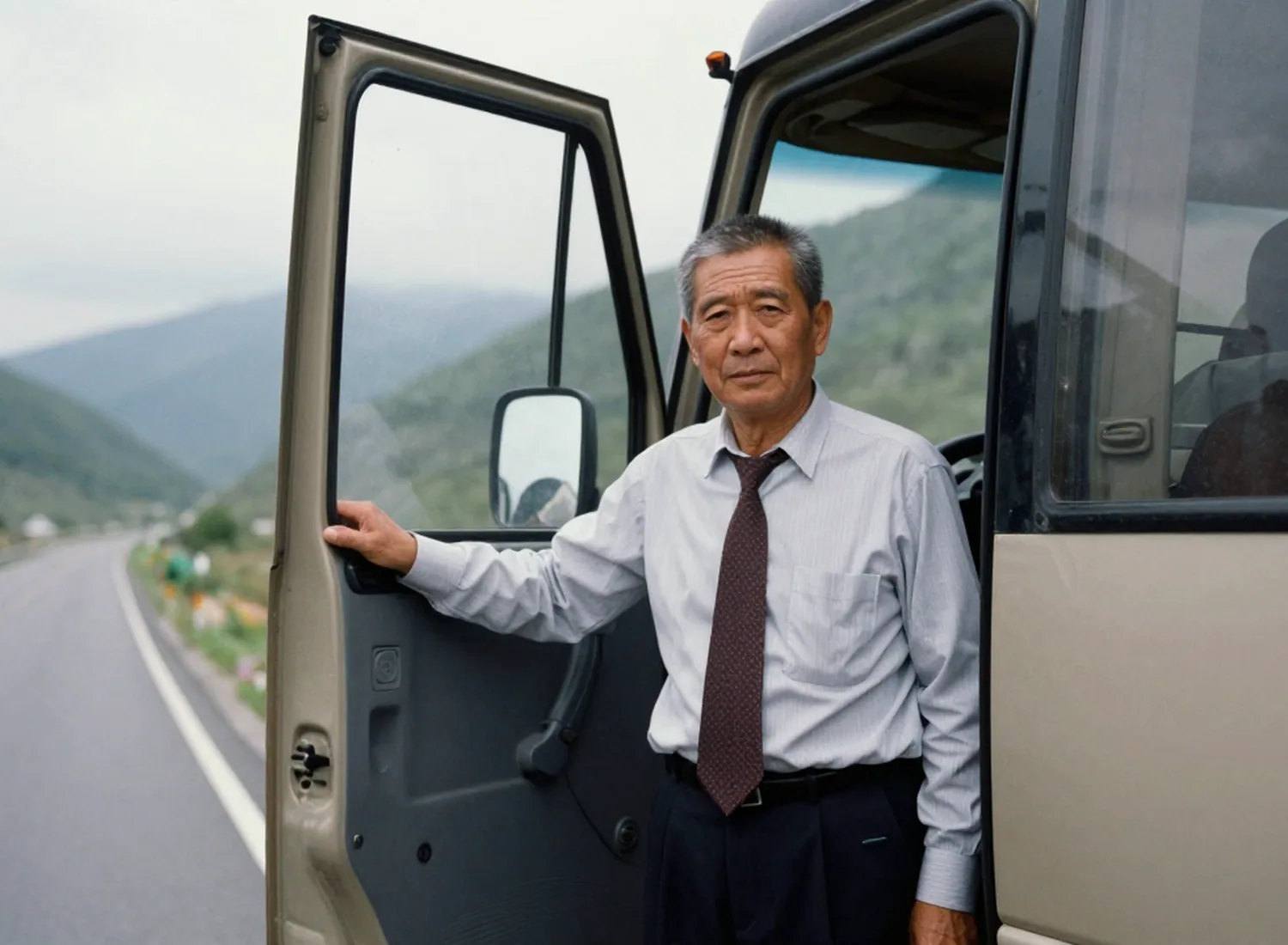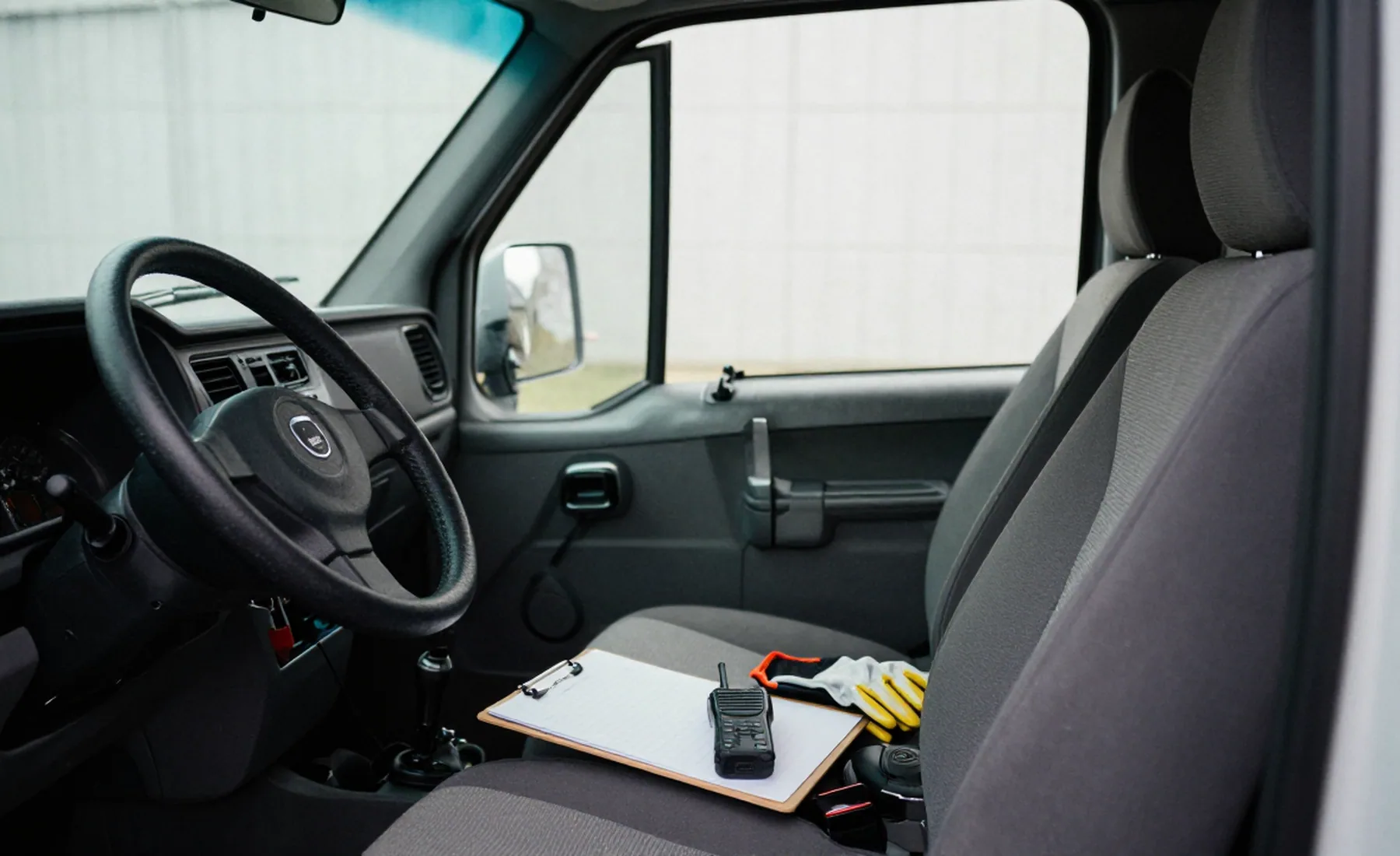
A road is designed to be crossed and not occupied. Everything about it — the surface, the sightlines, the speed limits — assumes that everyone present is going somewhere. The people in this collection are not going somewhere. They are at work, and the road is the floor of the building.
This produces a set of problems that other workplaces solved a century ago. There is no obvious lavatory. There is nowhere to eat that is not the seat you have been sitting in for six hours. The place where you kneel to do your job may be a live lane. Almost every subject in the collection has a practised answer about breaks, and most of those answers involve a car park.
It also produces a kind of expertise that is real, hard-won and completely unportable. Knowing where a lorry can turn in a particular village. Knowing what a cross-wind does to a light van at a particular point on a particular coast road. None of it transfers anywhere.